اللدAl-Lidd
across a century.
What can a photograph tell you about a city? What can only someone who lived there tell you?

Find the church in both photographs
St George’s Church is the common landmark. The earlier view looks across rooftops. The later view is from street level, with the neighbouring Al-Omari Mosque in the foreground. The photographs were taken from different viewpoints and at different scales.
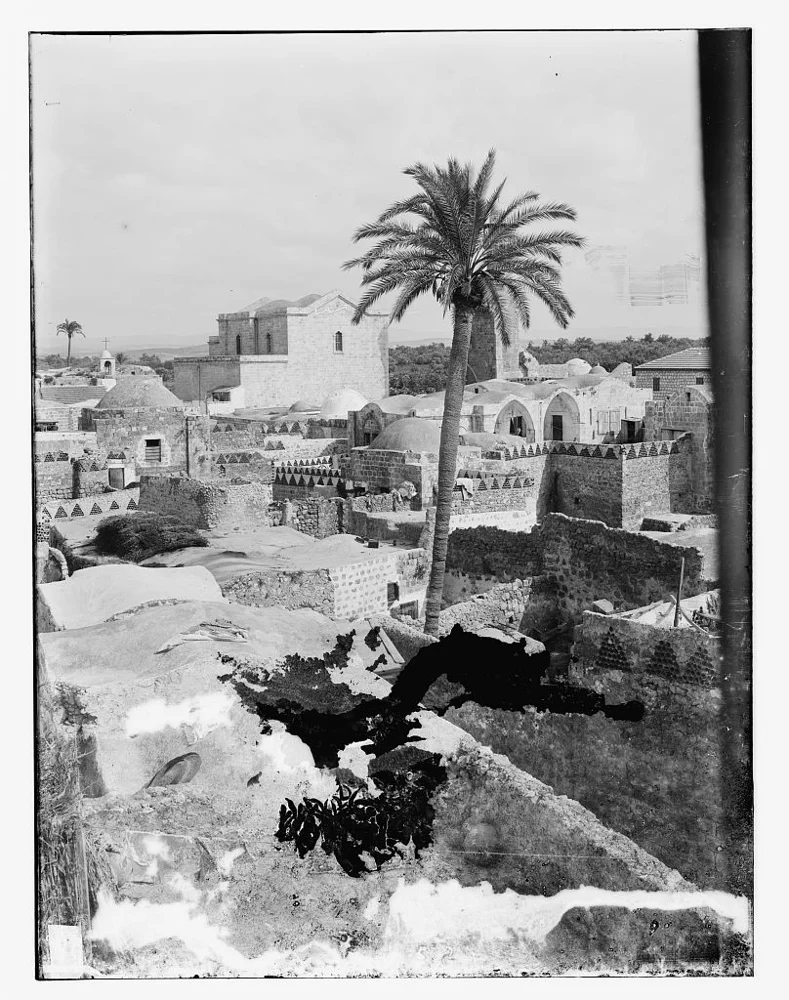

The church and mosque help locate the old town. To investigate changes in the street layout, use the historical map and the archaeological study of Lod (figures 13–17).
From a population record to a person
The photographs record buildings and streets. The records and testimony help explain what happened to the people who lived among them.
- 1945
The Mandate population record
The recorded population of Al-Lidd was 16,780. The figure describes the town at one point in time.
Open the record and map - July 1948
The expulsion order
Israeli forces captured the city. The Israeli army issued an order to expel Palestinian residents.
Read historian Benny Morris’s account · Read the PalQuest chronology - Oral history
Ismāʻīl Shammūṭ remembers
The Palestinian artist recounts the expulsion from his hometown. The interview is in Arabic, with English segment headings and keywords on the archive page.
Open the expulsion account at 52:40 · Explore school, markets and celebrations at 11:34
A 15-minute source lesson
For secondary students and adult groups. By the end, write one claim about Al-Lidd, cite two sources and explain a limit of each.
Before you start. Open the sources linked in the activity. The interview discusses wartime expulsion. For an English-language activity, use the archive’s English segment headings and keywords, or listen with someone who can translate the Arabic.
- 4 min
Look closely
Compare the two photographs of St George’s. Write down two details you can see and one question about the people who lived there. Label your observations separately from your guesses.
- 5 min
Read the record
Open the 1945 population record and the historian’s account of July 1948. Find who issued the expulsion order. Discuss why the 1945 population total cannot be used as a count of how many people were expelled in 1948.
- 4 min
Listen or read
Open Shammūṭ’s interview. Listen from 52:40 or use the archive’s English material. Identify one question the personal account can help answer that the population record cannot.
- 2 min
Make a claim
Write two sentences about what changed in Al-Lidd. Name two sources you used and say what remains uncertain.
Open this lesson and its source links at this page.
Notes for teachers and facilitators
Look for a distinction between what the photograph depicts, what the Mandate counted, what the military order directed and what Shammūṭ remembers. A population count three years earlier cannot establish how many left, when they left or what happened to each person. The photographs alone cannot explain the expulsion or establish which buildings changed.